

Our Story
The scent of Müskebi
Until 1961 the town was called Müsgebi; it became Ortakent because it sat right in the middle of the road. Where the old name came from is still argued over — local lore ties it to the muscat vineyards, linguists to a Greek word. What is certain is that this place was known for its vines and its mandarin groves for generations, and has been described as a town that still smells of bergamot. That is where the sense of season at Yüzgeç comes from: the kitchen follows the garden and the sea, not a calendar.
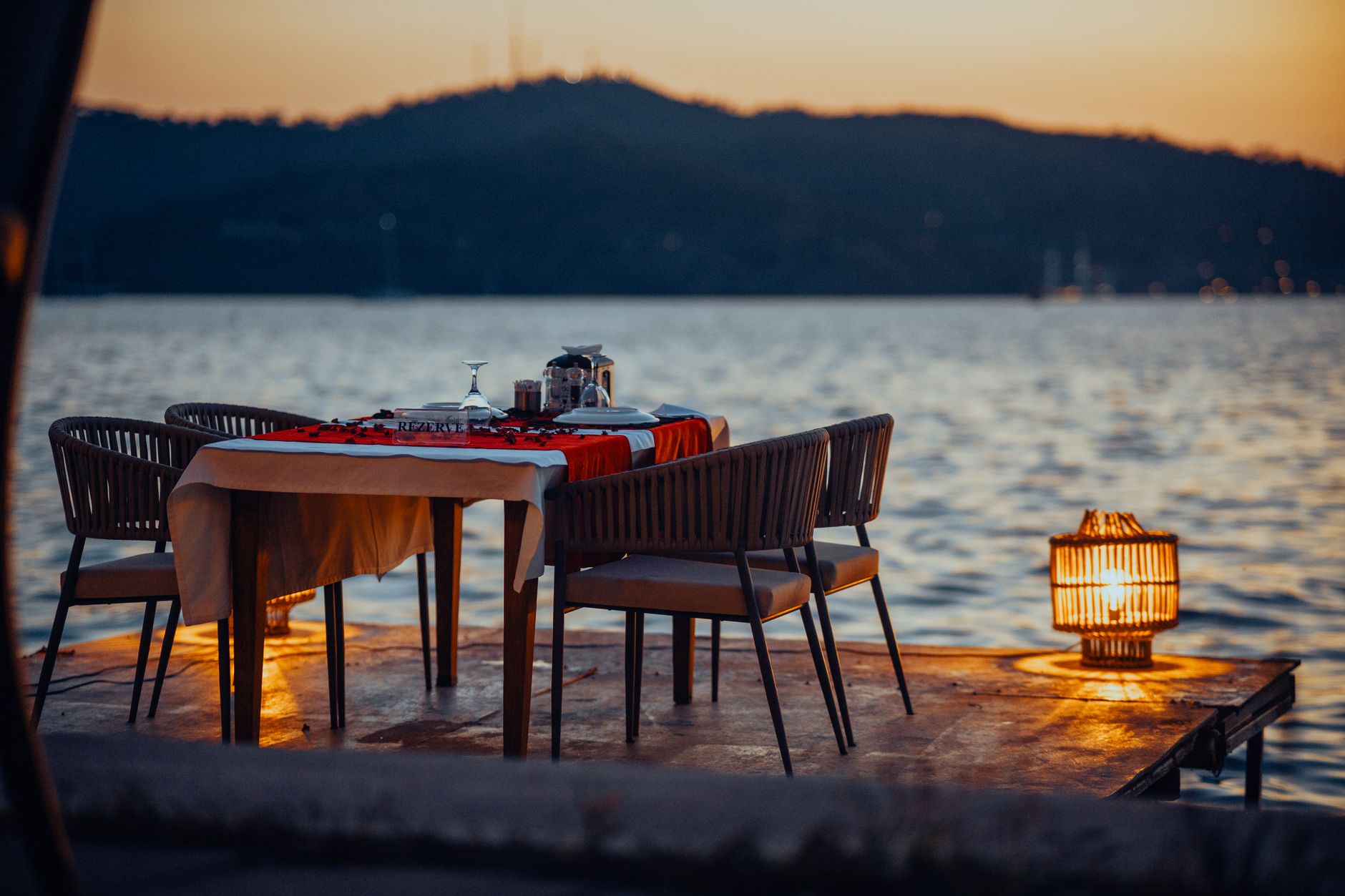
Beneath this table lie the traces of a 3,500-year-old civilization
Müskebi is home to the largest Mycenaean necropolis in Anatolia: some fifty chamber tombs and more than two hundred and fifty vessels dating to the 15th century BC, brought to light by excavations in the mid-1960s. So when you raise a glass here looking out at the water, a story three and a half thousand years old is lying under your feet. This is not just another table in Bodrum — it sits in the middle of a very old settlement.
A tradition that came down to the shore
Yüzgeç is a young place, and we don't pretend otherwise. The habit behind it is not young at all: this is the seaside table of a family that has been running a meyhane in the village of Gürece for close to forty years. What was learned in that small village garden — mezes made the way a mother makes them, kebabs that are never rushed — has simply been set up again a few kilometres away, at the water's edge. Same spirit, different view.
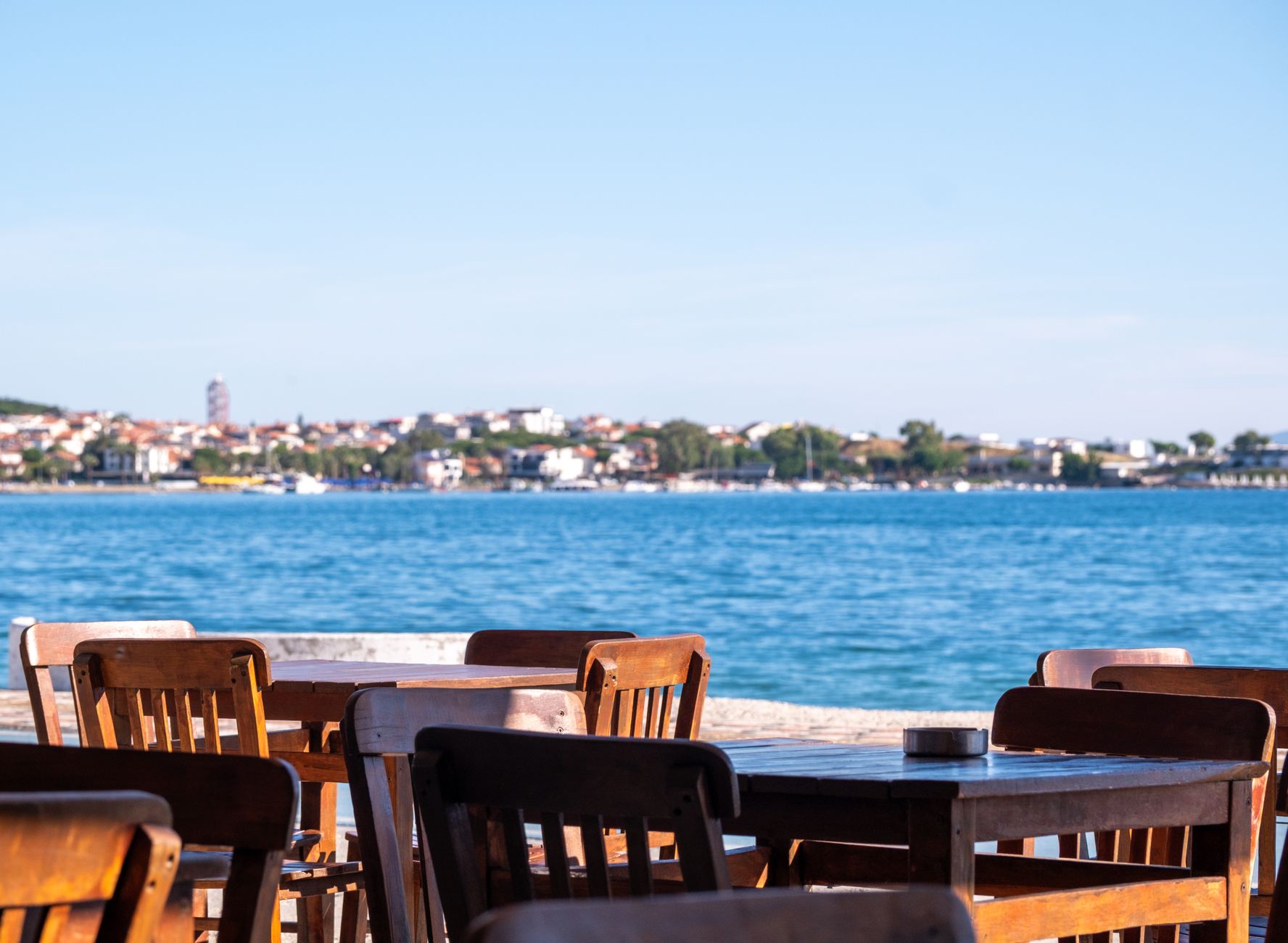
Blue-and-white cloth, bulbs strung overhead
The tables sit right at the water's edge, under blue-and-white cloth, with bulbs strung overhead. As the evening goes on the light drops, glasses are filled, the meze cabinet empties. Summer brings the crowd, winter the quiet — but the door stays open all twelve months. The plates change, the rakı table doesn't: mezes, whatever comes off the embers, whatever the sea gave that day.